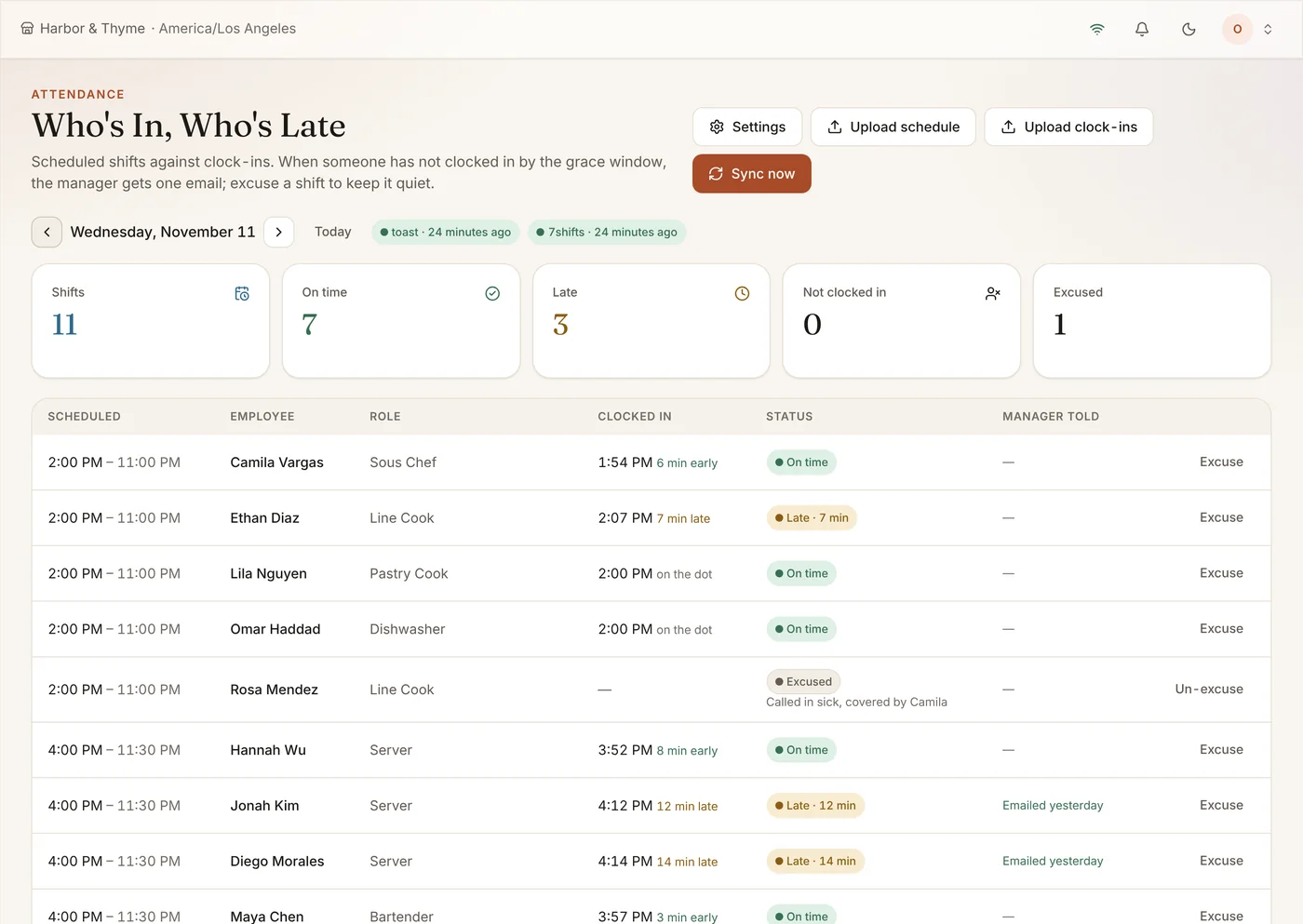
Finding out someone is missing when their first table sits is too late. Attendance checks the schedule against clock-ins all day and tells the manager once.
What It Does
- Late and missed clock-ins flagged
- One email to the manager, not a flood
- 7shifts is the master employee list
- Inactive staff hidden everywhere
Result → Fully staffed at open.
Who It Helps
For the Restaurant
- Know within minutes when someone has not clocked in
- Time to call in cover before the rush, not during it
- A clean record of lates and no-shows
For Your Team
- Excused lates are recorded with the reason
- Fewer nights working a person short
- One fair record for everyone
How It Pays for Itself
Short-staffed nights cost the most
A missed clock-in found ten minutes in still leaves time to call someone. Found at 7pm, it costs the whole floor.
Example: checking the schedule against clock-ins by hand takes about 15 minutes a day. At $30 an hour that is about $230 a month, before a single short-staffed night.
Examples use round numbers to show the arithmetic. They are not a promise of results; your own numbers will differ. Try it with your numbers.
One Email, Not a Flood
Late and missed clock-ins are flagged and the manager gets one email, not an alert per minute. Excused shifts are respected, and inactive staff are hidden everywhere.
How It Works
- Regular reads the schedule and clock-ins.
- It checks them every few minutes.
- The manager hears about a late start once.
Frequently Asked Questions
Which systems does it use?
7shifts for the schedule and Toast for clock-ins.